
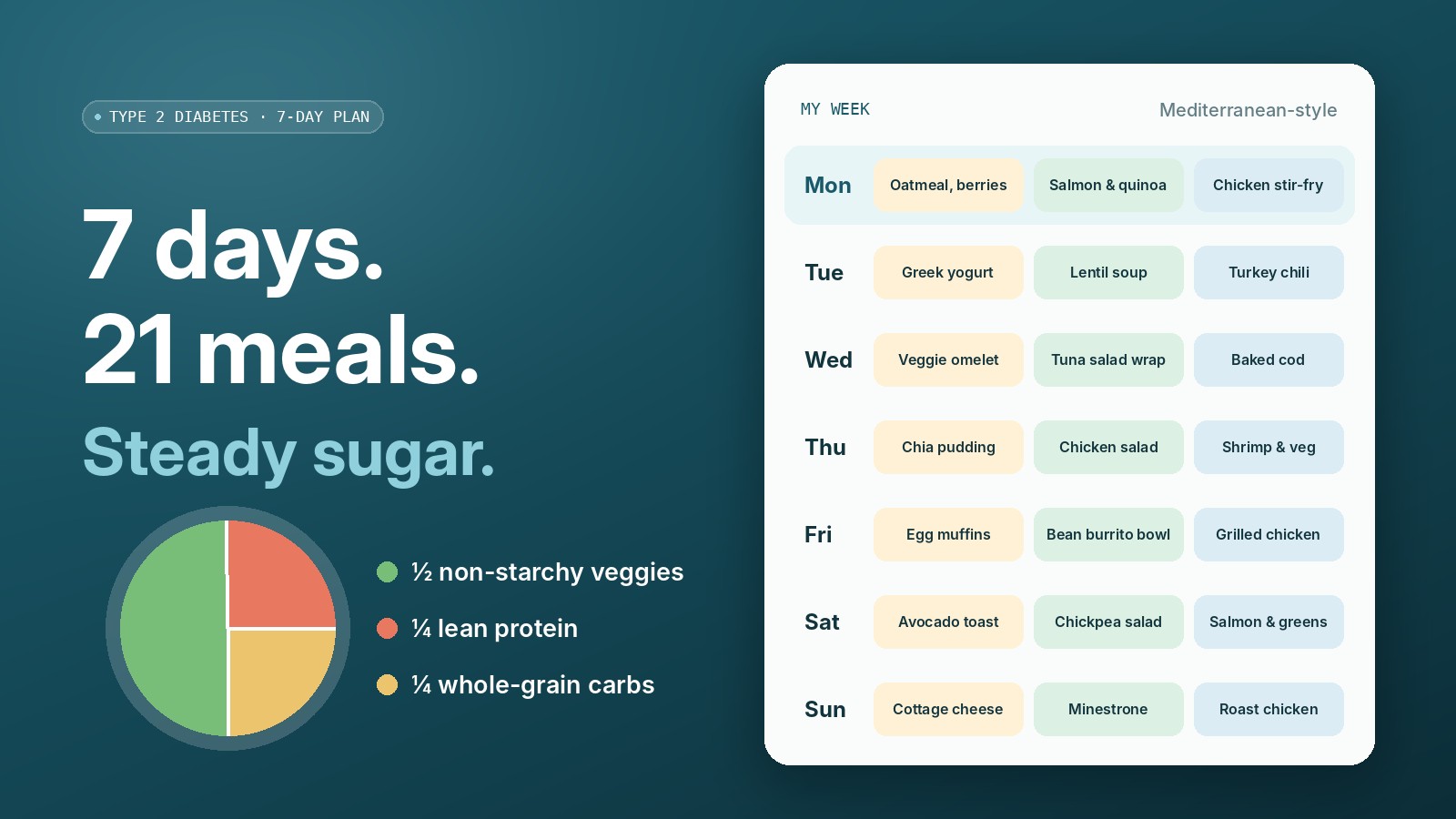
Planning what to eat is one of the hardest parts of living with type 2 diabetes. This 7-day meal plan gives you three balanced meals and a snack for every day of the week, using everyday foods you can find at any US, UK or Canadian grocery store. It follows the Diabetes Plate Method recommended by the American Diabetes Association, with a Mediterranean-style twist: plenty of vegetables, beans, fish, olive oil and whole grains.
Use it as a starting point, swap meals you don’t like, and adjust portions with your doctor or dietitian.
Important: carb needs differ from person to person, and some diabetes medicines, especially insulin and sulfonylureas, can cause low blood sugar if you eat much less than usual. Talk to your doctor or dietitian before making big changes, and check your sugar as advised.
How this plan works: the Diabetes Plate Method
Instead of counting every gram, build each meal on a regular 9-inch plate:
- Half the plate: non-starchy vegetables such as salad greens, broccoli, green beans, peppers, zucchini, cauliflower, tomatoes and mushrooms.
- A quarter: lean protein such as chicken, turkey, fish, eggs, tofu, beans or Greek yogurt.
- A quarter: carbohydrate foods, ideally high-fiber: brown rice, quinoa, whole-wheat pasta, whole-grain bread, beans, lentils, sweet potato or fruit.
- Water or a zero-calorie drink on the side.
Spreading carbs evenly across the day and pairing them with protein, fiber and healthy fat helps avoid big spikes after meals.
Your 7-day type 2 diabetes meal plan
| Day | Breakfast | Lunch | Dinner | Snack |
|---|---|---|---|---|
| Monday | Steel-cut oatmeal with berries and walnuts | Salmon, quinoa and mixed greens with olive oil and lemon | Chicken and veggie stir-fry with a small scoop of brown rice | Apple slices with 1 tbsp peanut butter |
| Tuesday | Plain Greek yogurt with chia seeds and a few strawberries | Lentil and vegetable soup with a slice of whole-grain bread | Turkey and bean chili topped with avocado | A small handful of almonds |
| Wednesday | Veggie omelet (spinach, peppers, mushrooms) with whole-grain toast | Tuna salad wrap in a whole-wheat tortilla with crunchy veggies | Baked cod, roasted broccoli and a small sweet potato | Carrot and cucumber sticks with hummus |
| Thursday | Chia pudding made with unsweetened almond milk and raspberries | Grilled chicken salad with chickpeas, tomatoes and feta | Shrimp and vegetable skillet with whole-wheat pasta | A pear and a cheese stick |
| Friday | Egg and veggie muffins (make a batch on Sunday) | Bean burrito bowl: black beans, brown rice, salsa, lettuce, avocado | Grilled chicken, green beans and quinoa | Plain Greek yogurt with cinnamon |
| Saturday | Avocado toast on whole-grain bread with a poached egg | Mediterranean chickpea salad with olive oil and lemon | Salmon, roasted zucchini and peppers, and a small portion of farro | A small handful of walnuts and berries |
| Sunday | Cottage cheese with peaches and pumpkin seeds | Minestrone soup with a side salad | Roast chicken, roasted Brussels sprouts and a small baked potato with skin | Celery with almond butter |
Portions are a guide. Most people with type 2 diabetes do well keeping the carb part of each meal to about a quarter of the plate, but your dietitian can tell you the right amount for you.
Shopping list for the week
- Vegetables: spinach, mixed salad greens, broccoli, green beans, zucchini, bell peppers, mushrooms, tomatoes, carrots, cucumber, celery, Brussels sprouts
- Fruit: berries, apples, pears, peaches (fresh or canned in juice), lemons
- Protein: salmon, cod, shrimp, chicken breast, ground turkey, eggs, canned tuna, tofu (optional)
- Beans and grains: lentils, chickpeas, black beans, kidney beans, steel-cut oats, quinoa, brown rice, farro, whole-wheat pasta, whole-grain bread, whole-wheat tortillas
- Dairy: plain Greek yogurt, cottage cheese, feta, cheese sticks, unsweetened almond milk
- Healthy fats: extra-virgin olive oil, avocados, almonds, walnuts, chia seeds, pumpkin seeds, peanut or almond butter, hummus
Simple rules that keep blood sugar steady
- Don’t skip breakfast if you take diabetes medicine in the morning, unless your doctor has told you otherwise.
- Eat at similar times each day. It makes your sugar more predictable and your medicine work more evenly.
- Choose whole fruit over juice, and drink water instead of soda or sweet tea.
- Add protein and fiber to every carb. Toast with an egg, fruit with nuts, rice with beans and vegetables.
- Take a 10-15 minute walk after meals. It can help lower after-meal sugar.
- Watch the salt if you also have high blood pressure: canned soups, deli meats and restaurant food are the biggest sources.
Check how the plan works for you
The best meal plan is the one that keeps your numbers in range. Check your sugar before a meal and 1 to 2 hours after for a few days, and note which meals cause a spike. Our blood sugar chart shows typical targets, and the HbA1c calculator turns your lab result into an average sugar.
In the free Curevity app you can log fasting and after-meal readings in seconds and see your trend in plain words. With Premium, the AI diet plan builds a new 7-day plan around your own readings, food preferences and budget. Prefer to start from a template? Try our diabetic meal plan builder.
Frequently asked questions
What is the best breakfast for type 2 diabetes?
A breakfast with protein, fiber and some healthy fat, like a veggie omelet with whole-grain toast, plain Greek yogurt with berries and nuts, or steel-cut oatmeal with walnuts. Avoid sugary cereals, pastries and juice.
Can people with diabetes eat fruit?
Yes. Whole fruit has fiber and nutrients. Berries, apples, pears and citrus are good choices. Keep portions moderate and pair fruit with protein or nuts.
Is the Mediterranean diet good for diabetes?
Many studies link a Mediterranean-style eating pattern, rich in vegetables, legumes, whole grains, fish and olive oil, with better blood sugar control and heart health. It’s one of the eating patterns the American Diabetes Association lists as an option.
How many carbs should I eat per meal?
There’s no single number for everyone. It depends on your size, activity, medicines and goals. A registered dietitian or diabetes educator can set a target for you; the plate method is a simple way to keep carbs moderate in the meantime.
This meal plan is for general information and does not replace advice from your doctor or dietitian. If you take insulin or medicines that can cause low blood sugar, ask your care team before changing how you eat.