
Forgetting a pill now and then happens to everyone. But for medicines that control blood pressure, diabetes, heart conditions or thyroid levels, missed doses add up, and they’re one of the most common reasons treatment doesn’t work as well as it should. The good news: you don’t need more willpower. You need a system.
Here are 12 practical ways to remember to take your medication, from simple habits to tools that do the remembering for you, and what to do if you or a parent still keep missing doses.
1. Tie each dose to something you already do
This is called habit stacking. Take your morning pills right after you brush your teeth or start the coffee, and your evening pills with dinner or before you plug in your phone. Linking a new habit to an old one is one of the most reliable ways to make it stick.
2. Keep medicines where you’ll see them
Out of sight really is out of mind. Keep your morning medicines next to your toothbrush or coffee maker (away from heat, humidity and children), not in a cabinet in another room.
3. Use a weekly pill organizer
A 7-day pillbox with morning and evening compartments shows at a glance whether today’s dose is gone. Fill it on the same day every week, for example Sunday evening.
4. Set reminders that don’t give up
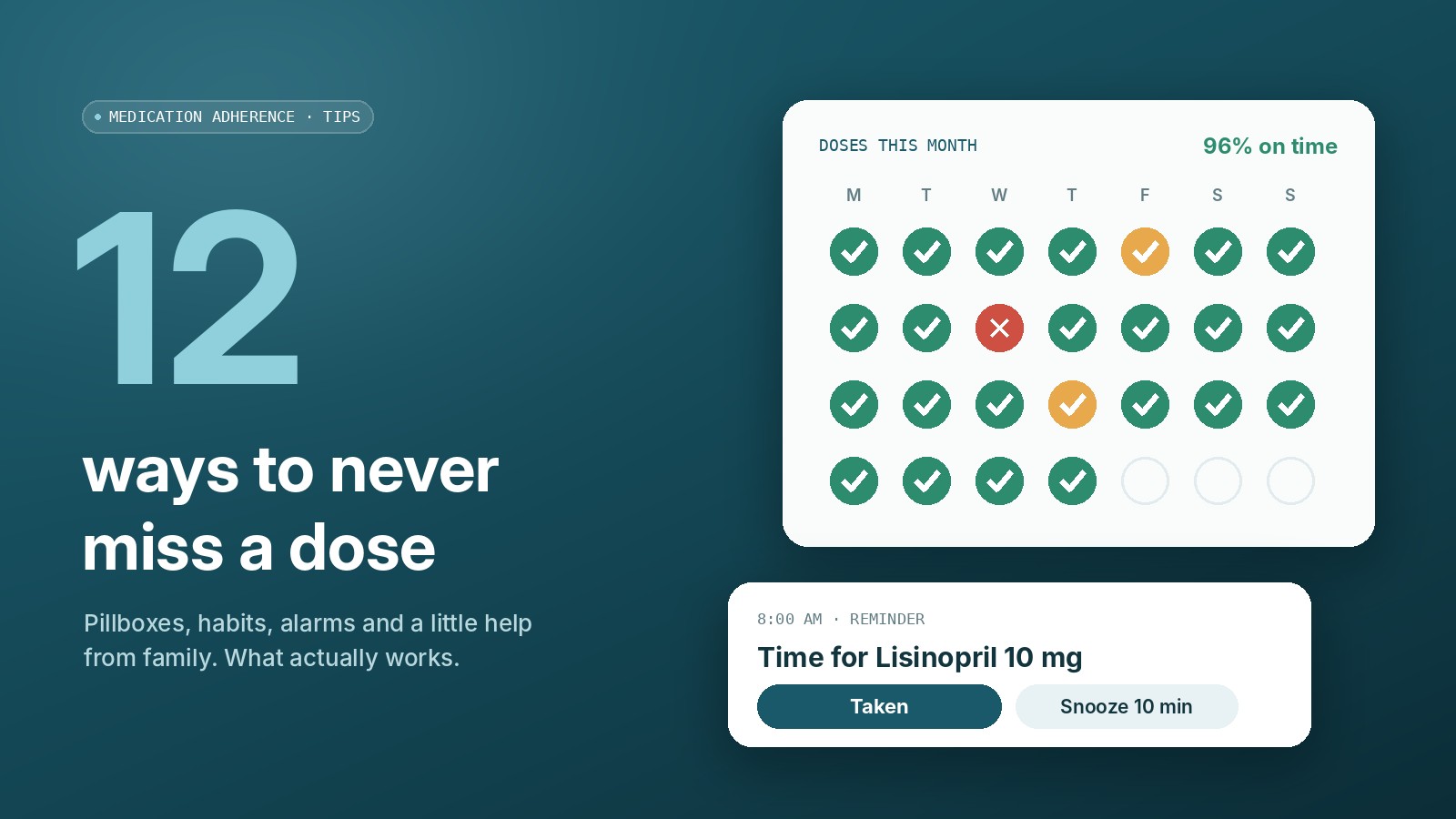
A single phone notification is easy to swipe away. Use alarm-style reminders that repeat until you respond, show on the lock screen, and let you tap Taken or Snooze right from the notification. This is exactly what the Curevity medicine reminder does.
5. Log every dose
“Did I take it already?” is a real risk, especially with blood thinners and diabetes medicines, where doubling up can be dangerous. A one-tap log removes the guesswork.
6. Plan for refills before you run out
Running out is one of the most common reasons for missed doses. Use an app that counts down your pills and warns you a few days early, set up automatic refills at your pharmacy, or ask about 90-day supplies.
7. Ask your pharmacy about med sync and blister packs
Many US, UK and Canadian pharmacies offer medication synchronization (all your refills on one day each month) and blister or multi-dose packs sorted by day and time. Both make it much easier to stay on track with several medicines.
8. Simplify your schedule with your doctor
If you take medicines at four or five different times a day, ask your doctor or pharmacist whether some can be taken together, switched to once-daily versions, or combined into one tablet. Fewer times a day means fewer chances to forget.
9. Prepare for travel and busy days
Keep a few days’ supply in your bag, keep medicines in your carry-on when flying, and ask your doctor or pharmacist how to time doses when you cross time zones.
10. Understand why each medicine matters
People are more likely to keep taking a medicine when they know what it does, especially for “silent” conditions like high blood pressure, high cholesterol and type 2 diabetes, where you feel fine either way. Ask your doctor or pharmacist what each pill is for and what happens if you skip it.
11. Talk about side effects instead of skipping
If a medicine makes you feel unwell, it’s tempting to quietly stop. Tell your doctor or pharmacist instead. There’s often a different dose, timing or alternative that works better for you. Never stop a prescribed medicine on your own.
12. Let someone you trust know when a dose is missed
For older parents or anyone managing several medicines, a gentle safety net makes a big difference. With Curevity, you can invite a family member as a caregiver. If a dose is missed, they get an alert on their phone, so they can call or check in. If it was just taken late, they get a “taken late, all good” update instead of a false alarm. One caregiver is free.
What to do if you miss a dose
- Check the leaflet that came with your medicine, or ask your pharmacist. Advice is different for each medicine.
- As a general rule, many medicines can be taken when you remember, unless it’s almost time for the next dose. In that case, skip the missed one.
- Don’t take a double dose to make up for a missed one unless your doctor or pharmacist tells you to.
- Some medicines need specific advice, including insulin, blood thinners, birth control, seizure medicines and HIV medicines. Call your pharmacist if you’re unsure.
Helping a parent remember their medicines
If you’re worried about a parent who lives alone or far away, start with a clear medicine list and a simple routine, then add a reminder app with family alerts. Our step-by-step guide on how to make sure your parents take their medicines on time covers how to set it up together. Switching from another app? See our free Medisafe alternative guide.
Frequently asked questions
What is the best way to remember to take pills?
Combine a habit (take them at the same moment every day, like after brushing your teeth), a visual cue (a weekly pillbox in plain sight) and a reminder that repeats until you respond.
Is there a free app to remind me to take my medication?
Yes. Curevity offers free alarm-style medicine reminders, refill warnings and missed-dose alerts for one caregiver, with no ads. iPhone also has a built-in Medications feature in the Health app.
How can I remind my elderly parent to take their medicine?
Set up a weekly pillbox, ask the pharmacy about blister packs, and use a reminder app that alerts you if a dose is missed, so you only need to call when it matters.
This article is for general information and does not replace medical advice. Always follow the instructions from your doctor or pharmacist.